HexStellar Runtime Software Unlocks Up to 22x Compute Capacity and 95% Energy Savings on NVIDIA Blackwell
HexStellar reports higher throughput and lower energy per operation from Runtime software on an NVIDIA RTX 5090 under load, with lower board power and temperature in selected comparisons.
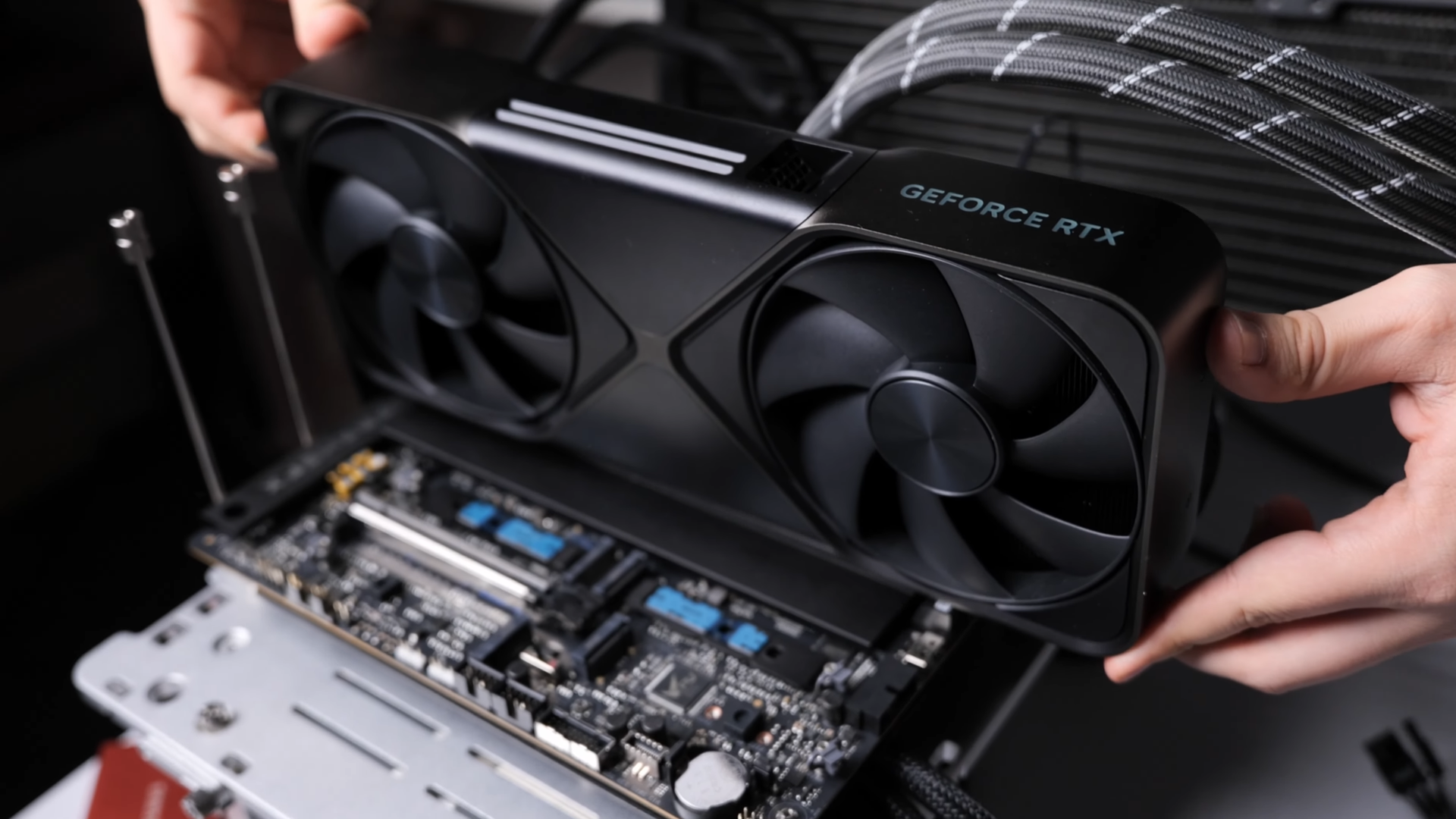
HexStellar reports that its Runtime software delivered up to 22.29× (+2,129%) throughput and 95.40% lower energy per operation on an NVIDIA RTX 5090, with lower board power and temperature in selected comparisons.
HexStellar Runtime is software that runs on existing computing hardware. In the company’s latest evaluation on an NVIDIA RTX 5090, founder Brayon Pieske watched more work finish as energy use, board power, and GPU temperature fell together.
“You see the temperature dropping—almost 12 degrees—you see joules dropping, watts dropping, and at the exact same time, the acceleration is happening.”
— Brayon Pieske, Founder & CEO of HexStellar
That simultaneous shift is the centerpiece of HexStellar’s newest Runtime announcement. In its Blackwell test series, the company reports up to 22.29× (+2,129%) throughput, 42.60% to 95.40% less energy per operation, and up to 38.6% lower measured GPU board power under load. Selected comparisons show temperature reductions of 6°C to 11°C; Pieske’s recollection describes an almost 12-degree drop while watching the telemetry.
The evaluation used a single NVIDIA GeForce RTX 5090, based on NVIDIA’s Blackwell architecture and listed in its CUDA hardware reference. NVIDIA supplies the GPU hardware; HexStellar supplies the Runtime software. The reported gains describe the selected workload comparisons on that GPU.
The work adds a Blackwell chapter to HexStellar’s earlier company-reported LLM inference campaigns on NVIDIA H100 hardware, part of the Hopper generation, alongside its work on Apple Silicon systems. The company’s earlier smart-glasses PoC also reported 305% more active computation time. HexStellar: wearable PoC company update Across those research settings, the objective is consistent: make more useful computation possible within the resources a system already has.
Turning the energy bottleneck into computing capacity
Electricity supply has become a practical constraint on computing expansion. The International Energy Agency’s October 2026 report, Powering Artificial Intelligence, identifies local-grid, network, connection, and permitting bottlenecks that affect how quickly new capacity can arrive. Buying processors addresses only one part of that infrastructure challenge. IEA: Powering Artificial Intelligence
In April 2026, IEA Executive Director Fatih Birol put the dependency plainly: “there is no AI without energy.” IEA: Data-centre electricity use surged in 2025
For an organization operating within a fixed electricity allocation, software efficiency creates another route to useful capacity. Completing a task sooner releases execution time. Completing it with fewer joules reduces the electricity required for that work. Improving both gives an operator two advantages to evaluate within the same installation.
HexStellar’s Blackwell comparison reports throughput, energy per operation, board power, and temperature under its test conditions. Read together, these measurements describe how much work finished and the resources used for that work.
This is why the result matters beyond a speed record. An organization can judge software by the additional tasks it can complete within its existing operating window and energy budget. More verified work from installed hardware is a capacity improvement with a direct operational meaning.
Six reported workload comparisons
The test series spans digital verification, transaction computation, security, stress testing, consensus computation, and verification workloads. Each workload is evaluated against its defined requirements for a valid result.
The table summarizes the company-reported results, with energy expressed per completed unit of work and power measured at the GPU board. Percentages in parentheses show throughput increases over the baseline, calculated as (multiplier − 1) × 100. Results remain specific to the listed workload comparisons.
Scroll horizontally to view all columns.
| Workload | Throughput | Energy / operation | Board power & temperature |
|---|---|---|---|
| Digital signature & identity verification | 22.29× (+2,129%) | −90.68% | — |
| Institutional transaction computation | 16.45×–19.93× (+1,545% to +1,893%) | −94.75% to −95.30% | −36 W to −75 W; up to −13.8%; −6°C |
| Security workload | 8.23×–17.04× (+723% to +1,604%) | −90.85% to −95.40% | −116 W to −135 W; up to −24.8%; −10°C |
| Stress workload | 2.98× (+198%) | −79.44% | −208 W / −38.6%; −11°C |
| Consensus workload | 2.95×–4.08× (+195% to +308%) | −71.38% to −75.90% | Lower board power reported |
| Verification workload | 1.74×–3.54× (+74% to +254%) | −42.60% to −79.11% | −148 W / −26.1%; 76°C → 65°C |
The largest throughput gain comes from digital verification: 22.29 times (+2,129%) the baseline rate of completed work. The strongest energy result appears in the reported security workload, at 95.40% less energy per operation. The stress workload combines 2.98× (+198%) throughput with the largest listed board-power reduction, 208 watts.
The categories also show why several measurements belong in the same announcement. Financial transaction tests report throughput gains between 16.45× and 19.93× (+1,545% to +1,893%), alongside energy reductions above 94%. The verification workload shows a different operating profile, with gains between 1.74× and 3.54× (+74% to +254%) and a selected temperature change from 76°C to 65°C. The result is a set of workload comparisons, each showing where speed and efficiency improved together.
Reading speed, watts, joules, and temperature
The relationship between execution time, power, and energy is measurable. Energy is power accumulated over time. For a declared interval, average power multiplied by duration gives the energy consumed; dividing by verified work completed gives energy per operation.
Energy per operation = average measured power × elapsed time ÷ verified operations completed.
That accounting makes simultaneous gains especially valuable. Lower average power reduces the rate of electricity use. Faster completion reduces the time required to finish the same work. Together, they can produce an energy-per-operation improvement larger than the board-power percentage alone.
The heavy stress result illustrates the distinction: 38.6% lower board power, 2.98× (+198%) throughput, and 79.44% lower energy per operation are separate measures of the reported comparison. Reading all three gives a fuller picture than quoting only watts or only speed.
The four observable outcomes are:
- More completed work. Reported throughput multipliers span 1.74× to 22.29× (+74% to +2,129%) across the six categories.
- Lower GPU board power. The largest listed reduction is 208 W, or 38.6%, in the stress sweep.
- Lower operating temperature. Selected paired comparisons show reductions of 6°C to 11°C.
- Lower energy per operation. Reported savings span 42.60% to 95.40%, depending on the workload.
These are GPU-level measurements. NVIDIA’s NVML documentation describes board-power readings for the GPU and associated circuitry, including memory; on Ampere GPUs other than GA100, and on newer architectures, the documented reading is a one-second average. “Measured GPU board power” is therefore the appropriate term here. NVIDIA: NVML device queries
Whole-system energy is a further useful operating measure. MLCommons, for example, measures MLPerf Inference data center power at the wall for the complete benchmark system. That wider boundary captures the infrastructure serving the workload. Temperature adds operating context, while energy measurements establish electricity consumption. MLCommons: MLPerf Inference data center
From a Runtime result to an operating advantage
The practical opportunity is to increase what existing infrastructure can accomplish. For a compute-intensive batch, faster completion can create room for additional jobs within the same schedule. For a constrained power allocation, lower energy per task can support more completed work within the available budget.
The relevant improvement follows the application. A verification service values completed checks and response time. A transaction workload values valid results and the resources required to produce them. A wearable application values useful computation within a limited energy supply. HexStellar’s research brings these questions to software running on the hardware already available.
Enterprise and institutional teams can bring their own workloads to a scoped Runtime evaluation. HexStellar’s published process provides for local, on-site, air-gapped testing under an agreed protocol and NDA, with the baseline, outputs, and useful outcome defined for the application. Discuss a Runtime evaluation
The Blackwell results make the objective concrete: higher throughput, lower measured power, lower operating temperature, and less energy for each completed unit of work. For an industry building around power constraints, the capacity already inside an installed system deserves a place in the expansion plan.
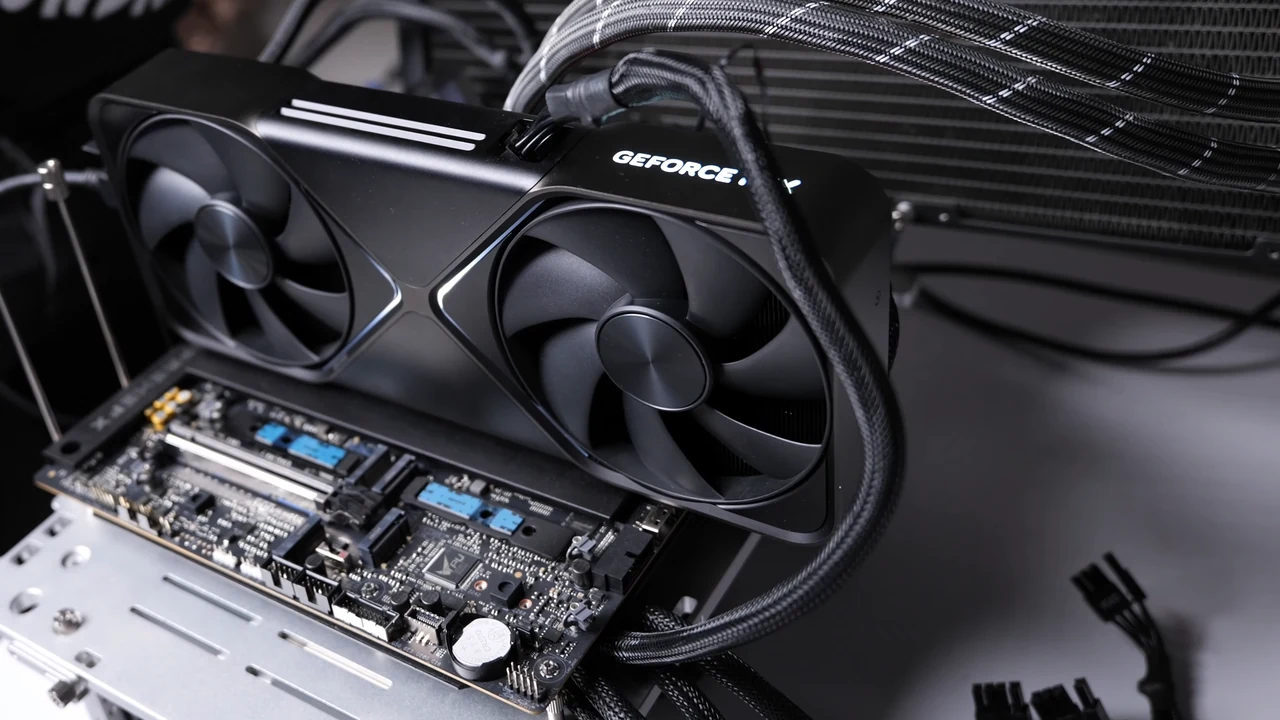
Cover credit: ZMASLO via Wikimedia Commons, CC BY 3.0. Photograph extracted from the creator’s January 2025 hardware video; resized, with cropped social variants.
Questions this answers
- Is HexStellar Runtime software or new GPU hardware?
- HexStellar Runtime is acceleration software for compatible computing workloads. The reported Blackwell tests ran on an NVIDIA RTX 5090. Compatibility, integration requirements, and useful improvements are evaluated for the selected workload and environment.
- Which workloads and research settings does the announcement cover?
- The Blackwell series reports six workload comparisons covering digital verification, transaction computation, security, stress testing, consensus computation, and verification. It adds to HexStellar’s earlier published H100 inference campaigns and wearable Runtime research.
- What improvements does the comparison report?
- The reported tests combine up to 22.29× (+2,129%) throughput with energy savings of 42.60% to 95.40% per operation under load. Selected comparisons also show lower measured GPU board power and operating temperature.
- How can enterprise and institutional teams evaluate their workloads?
- HexStellar offers scoped Runtime evaluations with local, on-site, air-gapped execution under an agreed protocol and NDA. Teams define the workload, baseline, required outputs, and useful outcome with HexStellar. Cortex separately provides managed access to its public computational beta.
Discuss the Runtime research
Contact HexStellar with questions about this research or a scoped Runtime evaluation. An evaluation should define its workload, environment, measurements, and verification criteria.